Skip to content Skip to search Skip to footer
WashU Medicine

Dominantly Inherited Alzheimer Network (DIAN)

Menu
  • Join the Registry
    • Individuals & Families
    • Researchers & Health Professionals
  • For Families
    • Genetic Counseling & Testing
    • Family Conferences
    • Video Gallery
    • Family Voices
    • DIAN in Latin America
    • EXR Newsletter
    • Webinars
    • Resources
    • Brain Donation
    • Message from Our Directors
  • Observational Study
    • Obs Study Sites
    • Study Description
    • Participation
    • Procedures
    • Advisory & Steering Committee
    • Funding: DIAN Obs Study
  • Clinical Trials
    • TU Participating Sites
    • Primary Prevention Trial
    • Secondary Prevention Trial
    • Research Updates
    • Funding
    • DIAN-TU History
  • Our Research
    • For Investigators
    • Our Collaborators
    • Research Fellows
    • DIAN Symposium
    • Pharma Consortium
    • Publications
    • Latin America Expansion
  • About us
    • The DIAN Team
    • Committees
    • Contact
  • News & Updates

Author: Ellen

Single Test Could Predict Alzheimer’s Symptoms Before They Even Begin (Links to an external site)

February 19, 2026February 23, 2026

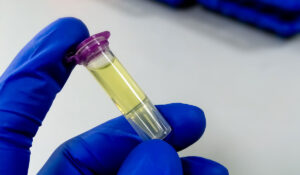
A single blood test may be able to predict when a person will develop Alzheimer’s symptoms—years before memory loss begins—according to new research from the Washington University School of Medicine in St Louis.

Promising clinical trials in Alzheimer’s prevention (Links to an external site)

November 9, 2025November 12, 2025

Jake Heinrichs is a Broadway theater electrician from Brooklyn who carries one of the early-onset genes. The disease claimed his grandmother, uncle, father and brother, all within the same age range. “Symptoms in the 40s and, and dying in 50s,” he said.

Promising clinical trials in Alzheimer’s prevention (Links to an external site)

November 9, 2025November 12, 2025

Carrie Richardson, 44, inherited a genetic mutation that caused early-onset Alzheimer’s disease. She’s participating in an Alzheimer’s research study at Washington University School of Medicine.

He Was Expected to Get Alzheimer’s 25 Years Ago. Why Hasn’t He? (Links to an external site)

October 7, 2025October 7, 2025

Scientists are searching for the secret in Doug Whitney’s biology that has protected him from dementia, hoping it could lead to ways to treat or prevent Alzheimer’s for many other people.

How Your Brain’s Nightly Cleanse Keeps It Healthy (Links to an external site)

August 22, 2025August 22, 2025

Washing waste from the brain is an essential function of sleep—and it could help ward off dementia

Three Siblings, One Fatal Gene: A Family’s Fight Against Early-Onset Alzheimer’s (Links to an external site)

June 28, 2025June 30, 2025

Among members of the Richardson family who carry a mutation in the PSEN1 gene, the average age when symptoms start is 39

Drug to slow Alzheimer’s well tolerated outside of clinical trial setting (Links to an external site)

May 12, 2025May 30, 2025

Side effects of lecanemab are manageable, study finds

Uncertainty around NIH funding leaves Alzheimer’s studies in limbo (Links to an external site)

April 24, 2025May 22, 2025

New blood test diagnoses Alzheimer’s disease and measures how far it’s progressed (Links to an external site)

April 1, 2025April 7, 2025

The new test could also help confirm whether Alzheimer’s or another condition is causing a person’s symptoms.

Predicting cognitive decline in Alzheimer’s (Links to an external site)

March 31, 2025April 3, 2025
(Photo: Getty Images)

New tests of blood and spinal fluid can show how far Alzheimer’s has progressed and how fast a patient’s memory will decline.

Posts navigation

1 of 13
Next Page

DIAN

Dominantly Inherited Alzheimer Network

WashU Medicine

660 S. Euclid Ave.

Campus Box 8111

St. Louis, MO 63110


Contact Us

Links

  • Investigator Resources
  • Current Participating Sites
  • DIAN Research Updates

Make a Difference

Your thoughtful contribution enables us to continue researching possible treatments and ultimately cures for this devastating disease.

DONATE

©2026 Washington University in St. Louis