Issue 3, 2025
In this issue:
The DIAN EXR Newsletter is distributed by the Dominantly Inherited Alzheimer Network Expanded Registry (DIAN EXR) and WashU Medicine Department of Neurology
Contact the editor: If you have an idea for a story or have questions about the information in this newsletter, please contact Jamie Bartzel at bartzel@wustl.edu.
Dedicated to Impact
What does impact look like?
The Dominantly Inherited Alzheimer Network celebrated 10 years of family conferences at its international gathering in Toronto, Canada on July 26, 2026. An anniversary compels reflection: how far have we come, and where are we going?
This year’s theme, Dedicated to Impact, resonated throughout the daylong gathering. In opening remarks, Marty Reiswig shared how an ancestor’s careful record-keeping and fierce advocacy paved the way for scientific discovery, and Dr. Maria Carrillo spoke of how the letters and phone calls from DIAD family members have challenged United States elected officials who allocate federal research funding. Dr. Tammie Benzinger spoke about concerns surrounding amyloid-related imaging abnormalities (ARIA)—a topic on people’s minds as drugs targeting Alzheimer’s disease begin to receive approvals around the globe. And Dr. Ken Kosik presented findings about genetic resilience, crediting global partner researchers and research participants with the knowledge gained from diligent family history collection. (All DIAD Family Conference recorded sessions can be found online.)
This decade of DIAD family gatherings has been possible thanks to the hard work of planning committee members (composed of both WashU Medicine staff and DIAD family members and caregivers), along with financial support from the Alzheimer’s Association and the GHR Foundation. Each year, family members in attendance remark that the gathering energizes them for ongoing research participation, advocacy, and community support. And professional attendees share that the Family Conference provides them with insight into DIAD family members’ personal experiences, helping refine the care and messaging they provide to their patients or research participants.
Leafy trees were prominent images throughout the 2025 DIAD Family Conference. Like a mature tree whose seeds are carried on the wind, one individual’s contributions spread and flourish. Where there was once empty land, a forest emerges. Each person who joins a study, supports a loved one facing Alzheimer’s, shares their experiences of caregiving or facing symptoms, provides financial support to studies, or carries out scientific research adds to this impact.
Behind the Scenes with the DIAN Observational Study
Since 2008, the DIAN Observational Study (DIAN Obs) has followed known or potential carriers of DIAD-causing genetic mutations. These 17 years of study are enabled by research coordinators working diligently behind the scenes. WashU Medicine DIAN Obs coordinators McCrae Johnson and Georgia Stobbs Cucchi offer a peek into the planning required for a participant’s study visit.
Jamie: What advance preparations are required for a participant visit?
McCrae: First, we have to schedule other personnel: clinicians for memory and cognitive assessments, a clinician for the lumbar puncture, a nurse who assists the lumbar puncture, pain management. We have to reserve conference and clinic space for cognitive testing and imaging. These imaging spaces are used by other studies across the university, so we have to reserve space up to 3 months before a participant visit.
Georgia: Clinicians who perform the lumbar puncture also have their own medical practice and their own patients, so we have to coordinate their schedules.
McCrae: And we arrange the visit to allow for rest, snacks, water breaks—we want to minimize stress and anxiety, and make sure people are hydrated. We have people stay at a hotel near our offices because visits begin early in the morning, to minimize travel time.
Jamie: So you’re fitting puzzle pieces into place, working to get your own participants what they need.
Georgia: Yes, including outside resources. PET scan tracer materials are shipped in from another state; blood samples are shipped to outside labs for processing, and those mailings all need to be carefully timed and temperature-controlled.
Jamie: While you’re doing all this work in the background, are there things participants can do to make sure visits go smoothly?
McCrae: We want people to come in a day before their procedures, and early in the day if possible, so they’re rested and hydrated. This helps imaging and lumbar punctures go smoothly. We ask participants not to do anything strenuous for 24 hours after a lumbar puncture—that includes avoiding things like lifting heavy luggage or drinking alcohol. And wear comfortable clothes and shoes!
Georgia: If circumstances change and someone has to change their visit schedule, we want to know as soon as possible. We need to make sure all the spaces and people we need are available, and that supplies (like PET scan tracers) don’t go to waste. We do ask people to plan so far in advance, but it’s so everything goes smoothly for the participant.
McCrae: Let study coordinators know if you’re uncomfortable! If lying in a scanner hurts your back, or if you need a snack or something to drink, we want to help. People don’t always know they can ask for little things, but we’ll do whatever we can to make things more comfortable. Some people want a hand to hold, while others don’t want to be touched. Some people like to chat while others prefer quiet. It’s not a burden to communicate your needs; you know your own body.
Georgia: You’ll never shock nurses. We’ve seen and heard everything!
Jamie: Beyond the work involved, what are some things only study coordinators get to see?
McCrae: The study visit is where people can talk candidly; there’s no outside family in the room. Sometimes emotions come up, but conversations are confidential, and everyone in the study is familiar with DIAD.
Georgia: Participants sometimes feel overwhelmed, in a positive way, to see how many people are working for them and their good.
McCrae: Unlike bedside nursing, we get to stay with people a long time, and follow them year after year, learn about their preferences and their families. There are sweet moments; people have sent me happy updates and wedding photos.
Jamie: What else would you want participants to know?
Georgia: Our dream for you is that you don’t think about us outside of study visits, that we can get everything set up so you can go back to your life and not have to worry about it—all so your children and grandchildren don’t have these worries in the future.
European Family Meetings in 2025
Family Meeting in the Netherlands: Reflections from Senne Lageman (PhD candidate, Alzheimer Center Amsterdam)
On April 12th, 2025, over 70 family members and researchers gathered in Amsterdam for the biennial ADAD Family Day. We kicked off by celebrating a special moment: Jetske van der Schaar received the Houbolt Fellowship, allowing her to continue her promising work on the genetics of Alzheimer’s disease. Prof. Scheltens provided an update on recent advances in Alzheimer’s drug development, followed by Jetske’s talk on genetic testing and its emotional impact, drawing on experiences from DIAN participants. We heard cognitive scientist Jason Hassenstab present new methods to detect early cognitive decline using app-based tasks. In the afternoon, families joined parallel sessions on topics like communication, care, and fundamental research, including a session by Prof. De Strooper and Prof. Van Kesteren on how basic research drives clinical progress.
The day concluded with an interactive discussion about ongoing research, bringing together families and us researchers. The mix of scientific progress, personal stories, and open discussions created an overall positive atmosphere and showed the growing momentum moving forward. I am grateful I could be there and hope to contribute to many more moments like this in the future. Many thanks to Lisa Vermunt, Jetske van der Schaar, Sven van der Lee, and Ghiselinde Meijs as well as Alzheimer Center Amsterdam, Brain Research Center, Alzheimer Nederland, and DIAN for facilitating this day.
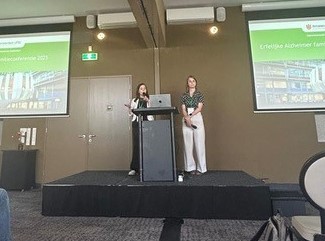
Pictured: Lisa Vermunt and Jetske van der Schaar of Alzheimer Center Amsterdam
Family Meeting in the United Kingdom: Reflections from Dr. Natalie Ryan (neurologist, University College London)
The sun was shining in London on 28th June 2025 as we gathered together for the Rare Dementia Support (RDS) FAD support group annual seminar. Forty-eight people from families affected by FAD from the UK and Ireland attended, joined by 15 members of our FAD team at the Dementia Research Centre (DRC) at UCL and RDS. This was our 15th annual meeting and alongside presentations on the latest scientific advances in FAD research, we celebrated the remarkable contributions that members of the group have made.
Prof. Nick Fox joined the Jennings family and producer Niamh Kennedy in a discussion of their experiences creating the award-winning BBC documentary The Jennings versus Alzheimer’s, which tells the story of Carol Jennings and her lifelong dedication to advocacy and research. Carol’s 1986 letter sharing her family history of AD and offering to help with research led to identification of the first genetic cause of AD. She inspired so many of us, and her letter was the starting point for my collaboration with artist Briony Campbell and members of the FAD support group to develop the arts-science knowledge exchange project Walking in your footsteps, funded by UCL Public Art. Tamara Astor performed an extract from the one-woman theatre piece she is developing with her friend and director Sophie Besse. She hopes to launch her show Unforgettable: An Alzheimer’s Cabaret! in 2026, bringing her own unique perspectives on FAD to diverse public audiences.
The day also included an update on FAD drug trials from Dr. Nadia Magdalinou and a presentation from Ollie Hayes on the IWARF (Improving Wellbeing Associated with Rare Familial Dementias) trial, which is now open to recruitment. I discussed a new study we’re developing to investigate blood vessel function in the brain, with the ultimate aim of reducing treatment-related risks. Dr. Chris Hardy presented research he is undertaking into brain-related hearing impairment in AD, supported by the Alzheimer’s Society Carol Jennings Fellowship, which honours her legacy.
Finally, Prof. Seb Crutch and Nikki Zimmerman shared updates on RDS and the new Hilary and Galen Weston Rare Dementia Support Centre, which is due to open its doors in London’s Woburn Square in Spring 2026. Many RDS members have fundraised to support the development of this centre, from running marathons to hosting events in their communities, and thanks to all these contributions the centre will provide specialist support, educational and cultural programmes for people affected by rare dementias and those who support them. We can’t wait for it to open—you will find a homey space and a very warm welcome!
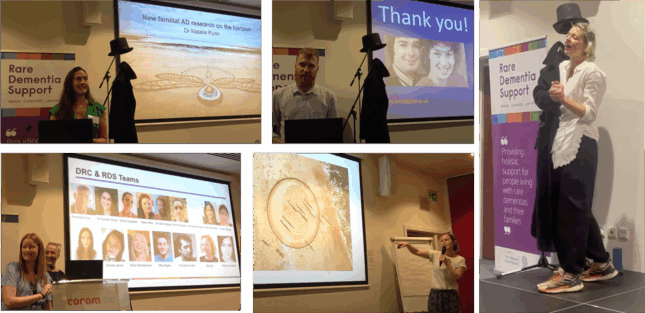
Pictured (clockwise from top): Natalie Ryan, Chris Hardy (with photo of Stuart and Carol Jennings), Tamara Astor, Briony Campbell, Nikki Zimmerman (Direct Support Services Lead at RDS), Helen Rice (FAD specialist nurse and DIAN Observational Study coordinator)
Attending the Alzheimer’s Association International Conference (AAIC): A Family Perspective
The Alzheimer’s Association generously offered complimentary AAIC registration to family members who were in Toronto for the DIAD Family Conference in July 2025. Jamie spoke to Chris,* a DIAD family member who attended both conferences.
Jamie: What made you want to attend AAIC?
Chris: I have a general interest in and appreciation for scientific progress. Said interest and appreciation is even greater when it comes to Alzheimer’s, given its impact on my life. AAIC provides an incredible opportunity to learn about the newest discoveries in the field, for which I am very grateful.
Jamie: How did it feel to be in the company of Alzheimer’s researchers for several days?
Chris: Intellectually, the experience of learning so many new things is invigorating, especially when there is an opportunity to engage and interact with the researchers directly. Emotionally, it is inspiring to see the steady progress they are making in not only in understanding Alzheimer’s, but in treating it.
Jamie: And how did it feel to go from the DIAD Family Conference immediately to a more academically-focused event?
Chris: It’s the best of both worlds - you get to experience both an intimate environment and community of people with shared experiences, as well as a global environment and community with a shared cause.
Jamie: If you were given a microphone during the opening talk, what would you want to say to the researchers at AAIC?
Chris: It is profoundly moving to see how many people are committed and invested in addressing Alzheimer’s and improving everyone’s lives. I have hope that through their efforts, we will one day no longer have to fear this condition and the harm it does not only to individuals and families, but to our communities as a whole.
*A pseudonym is used to protect this family member’s privacy.
Featured DIAN Principal Investigator: Dra. Ana Luisa Sosa Ortiz
Dra. Sosa Ortiz serves as a DIAN-TU Principal Investigator at the Instituto Nacional de Neurologia y Neurocirugia Manuel Velasco Suarez (INNN) in Mexico City, Mexico. In August 2025, she was designated as Investigadora Nacional Emérita by the Consejo General del Sistema Nacional de Investigadoras e Investigadores. This designation is awarded by the Consejo General del Sistema Nacional de Investigadores e Investigadoras, an important national system that evaluates scientific productivity in Mexico. “Emérita” is reserved for researchers with extraordinary, sustained, and internationally recognized scientific contributions. Only a small, select group of scientists in Mexico receives this distinction each year, across all fields.
“Working alongside Dra. Sosa in DIAN and other research initiatives has been a privilege,” shares Dr. Jorge Llibre Guerra, Associate Medical Director for DIAN-TU and Clinical Core Leader for DIAN (Obs . “Her scientific vision, mentorship, and deep commitment to DIAD families have made her an invaluable leader within the network. Her designation as Investigadora Nacional Emérita is richly deserved and reflects the profound impact she has had on dementia research in Mexico and across DIAN.”
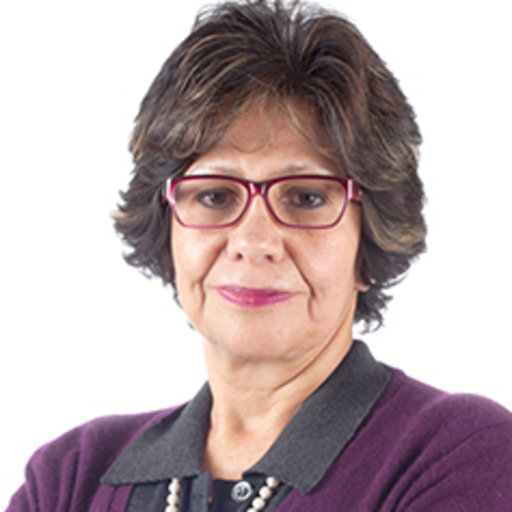
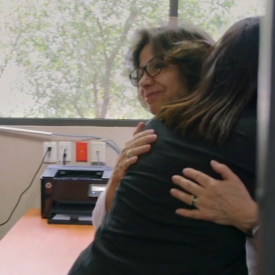
Pictured: Dra. Ana Luisa Sosa Ortiz (left); Dra. Sosa Ortiz hugs a research participant during a study visit (right)
Primary Prevention Site Updates
DIAN-TU 002 Primary Prevention trial sites are beginning enrollment around the world! Argentina, Canada, Colombia, and the United States are already enrolling participants. The following countries are planned to begin enrollment on the following timelines (pending all regulatory approvals):
Quarter 1, 2026: Australia, Brazil, New Zealand, United Kingdom
Quarter 2, 2026: France, Germany, Italy, Netherlands, Spain
Quarter 3, 2026: Mexico
If you are interested in learning more about the Primary Prevention trial, please contact dianexr@wustl.edu.
Alzheimer’s in the Media
Alzheimer’s disrupts circadian rhythms of plaque-clearing brain cells
Why one man with a genetic predisposition for Alzheimer’s disease is defying the odds
Promising clinical trials in Alzheimer’s prevention
He Was Expected to Get Alzheimer’s 25 Years Ago. Why Hasn’t He?
Recent DIAN Publications
Cross-Sectional FDG in Down Syndrome and Autosomal Dominant Alzheimer’s Disease
Associations of lifestyle factors with amyloid pathology in persons without dementia
Comparison of amyloid chronicity and EYO in autosomal dominant Alzheimer’s disease
For a full list of publications using DIAN Obs and DIAN-TU data, visit PubMed.
DIAN Obs and DIAN-TU data are increasingly published in scientific reports to advance scientific understanding of Alzheimer’s disease. There is a marginal risk that a participant reading or hearing of these scientific reports might guess, correctly or incorrectly, information including their own or a family member’s mutation or treatment status. We take every step to minimize this risk, including ensuring that all study data lack identifying information, but de-identified data may reveal a pattern suggesting a person’s mutation or treatment status. Avoid articles or presentations related to our studies to decrease this risk.
If you are interested in research opportunities,
contact the DIAN Expanded Registry at dianexr@wustl.edu.
The DIAN Expanded Registry is supported by the Alzheimer’s Association, GHR Foundation, an anonymous organization, private donors, the DIAN-TU Pharma Consortium, DIAN-TU industry partners, and the National Institute on Aging of the National Institutes of Health under Award Numbers U01AG042791, R01AG046179, R01/R56 AG053267, U01AG059798, and R01AG068319. The content is solely the responsibility of the authors and does not necessarily represent the official views of the National Institutes of Health.