Issue 2, 2026
In this issue:
The DIAN EXR Newsletter is distributed by the Dominantly Inherited Alzheimer Network Expanded Registry (DIAN EXR) and WashU Medicine Department of Neurology
Contact the editor: If you have an idea for a story or have questions about the information in this newsletter, please contact Jamie Bartzel at bartzel@wustl.edu.
A Legacy of Clinical Trials
While clinical trials may seem quite modern, the first recorded, randomized clinical trial was conducted in 1747. Aboard a British naval ship, surgeon James Lind treated sailors suffering from scurvy a dose of citrus fruit—and crucially, only gave some sailors the active treatment. This led to the discovery that vitamin C deficiency causes scurvy. At WashU, led by DIAN Observational Study Executive Director, Dr. Alisha Daniels, DIAN staff members celebrated Clinical Trials Day with gifts of fresh lemons and limes, in remembrance of Dr. Lind’s discovery and the legacy of medical research that has followed. Together, scientists and administrative coordinators were invited to reflect on the 2026 theme, Research Rising.
DIAN staffers shared what Research Rising means to them: “Curiosity and hopeful discovery.” “Working toward a shared, evidence-based goal.” “Creating more research pathways for more people!” Pledges were made to Rise in Research: “To advance hope through compassionate connection.” “To transform care through innovation.” “To find treatments and a cure!” Down the office hallway, these signs appear on doors, reminding us of our shared commitments—and our place in history.

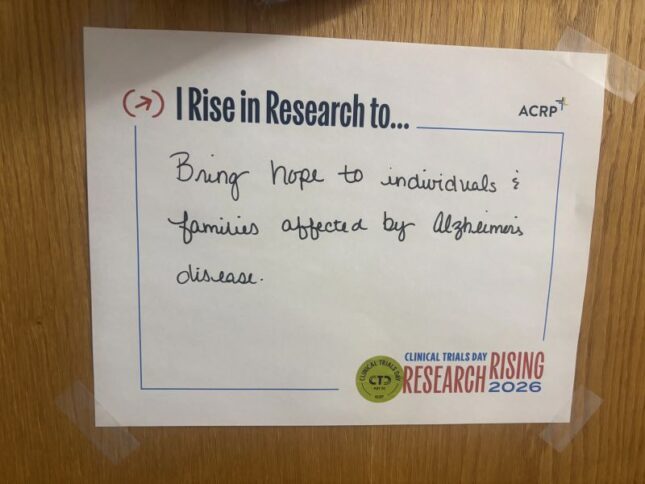
Pictured: signs that adorn the office doors of DIAN staff in celebration of Clinical Trials Day
Summer 2026 Conferences
The 2026 DIAD Family Conference will be held in London, United Kingdom on Saturday, July 11. While the conference is at capacity, there will be a live video feed of the morning scientific program. Members of the DIAN Expanded Registry who are verified to be members of a DIAD family will receive an email invitation with the livestream password. (If you are part of a DIAD family, join the Expanded Registry to receive these emails and other important notices!) Alzheimer’s researchers and clinicians may also email dianexr@wustl.edu by July 2 to request the event password. Videos will be posted on our website after the event.
Alzheimer’s researchers and clinicians from around the world gather for the Alzheimer’s Association International Conference (AAIC), which will also take place in London, United Kingdom from July 12-15, 2026. However, you can join the excitement from the comfort of your home on Thursday, July 16 with AAIC for All: Community. (Enjoying a cup of English breakfast tea while watching is optional.) View the program agenda, and register for free.
Dementia health care professionals can also join AAIC For All: Clinicians live on Thursday, July 16 or access 30-day on-demand access. CME/CE credits may be available. View the clinicians’ program agenda, and register online.
Resources for Learning about ARIA
Voices of Alzheimer’s offers a webinar, “Separating Fact from Fear: A Patient’s Guide to ARIA” on Tuesday, June 30th from 1:00–2:00 PM EDT (GMT-4). As amyloid-targeting therapies become more widely available, patients and care partners are increasingly encountering the term “ARIA,” and with it, a range of questions and concerns about what it means for their treatment journey. Learn more and register online. A recording will also be shared on the Voices of Alzheimer’s YouTube channel after the event.
Those interested in learning more about ARIA can also view Dr. Tammie Benzinger’s presentation, “Amyloid-Related Imaging Abnormality (ARIA): Its Causes, and Its Treatment and Prevention” as well as the post-talk panel discussion from the 2025 DIAD Family Conference in Toronto, Canada.
Recognizing Excellence among DIAN Researchers
The Cure Alzheimer’s Fund, a nonprofit dedicated to funding research toward the goal of curing Alzheimer’s disease, awarded its third annual Jeffrey L. Morby Prize for Exceptional Research to Drs. Randall J. Bateman and Kanta Horie of Washington University School of Medicine in St. Louis, and Drs. Oskar Hansson and Gemma Salvadó of Lund University, Sweden. These researchers were selected by their peers for recognition of their publication, “Plasma MTBR-tau243 biomarker identifies tau tangle pathology in Alzheimer’s disease.”
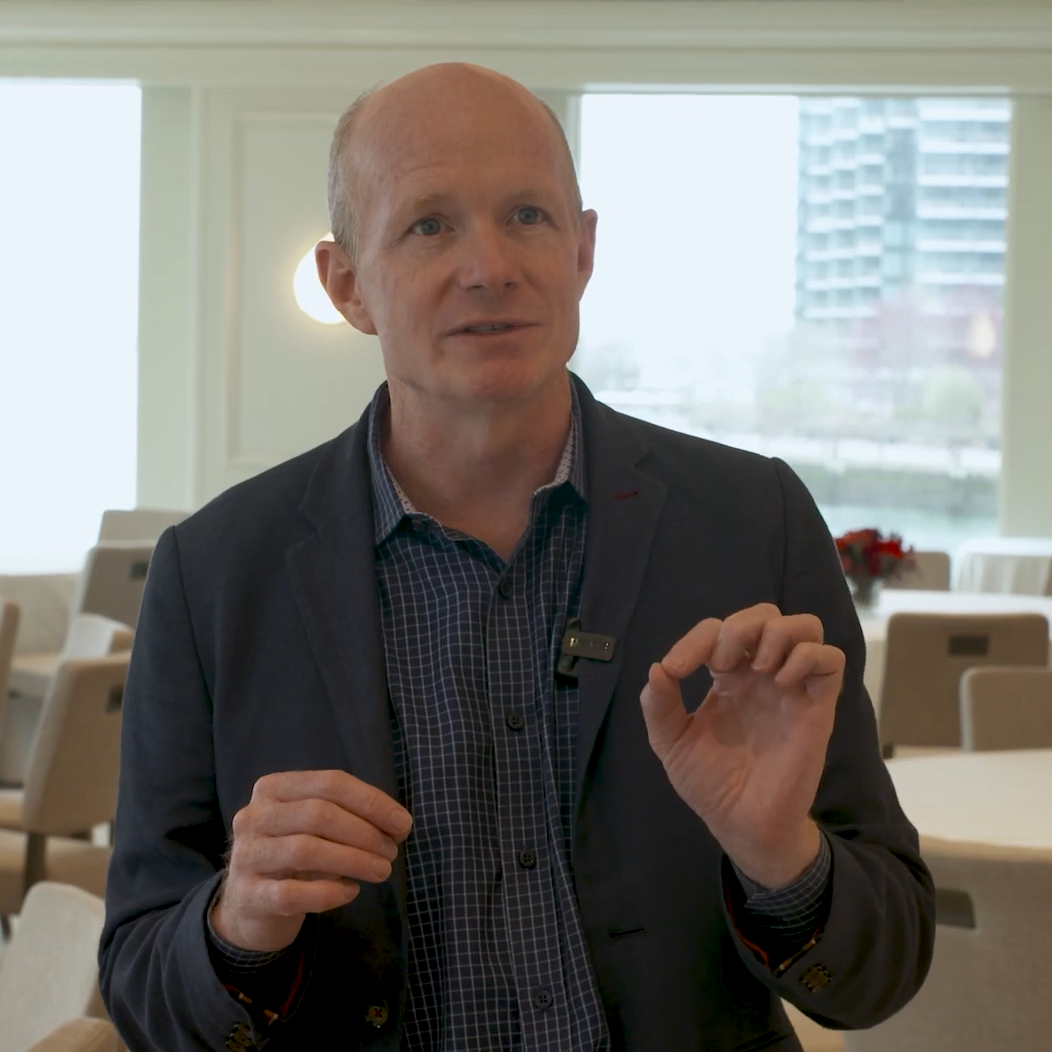
The Bayh-Dole Coalition’s American Innovator Award recognizes individuals whose achievements exemplify the personal commitment, sacrifice, risk, and determination required to move a federally-funded invention from the laboratory into the marketplace where it can benefit the public. Drs. Randall Bateman and David Holtzman, neurologists and professors at Washington University School of Medicine in St. Louis, were recognized for pioneering PrecivityAD® and PrecivityAD2™, the first blood-based diagnostic tests for Alzheimer’s disease. As aware recipients, they are featured in the Bayh-Dole Coalition’s 2026 Faces of American Innovation report.
Research Opportunity for Youth and Young Adults
The University of California, San Francisco Dyslexia Center is conducting the “Development in Families with Neurodegenerative Disease” study. This is a novel study to better understand brain development during childhood and young adulthood in families with a history of dementia.
This study is recruiting individuals, ages 7 to 25, from families with a known genetic mutation for either Alzheimer’s Disease or Frontotemporal Dementia. Participants and their families will not learn their mutation status. The aim of the study is to learn more about the diverse brain, behavioral, and cognitive profiles throughout the lifespan.
Participation in this study involves a 2-day research visit to UCSF for cognitive assessments, a neurological evaluation, an MRI brain scan, and other activities.
What participants can expect:
- Extensive neuropsychological testing plus a feedback session with the clinicians (neuropsychologist, neurologist). A written summary of results will be provided upon request.
- Reimbursement for flights, lodging, transportation, and meals is available.
- A stipend will be provided to compensate for parental wages lost during study participation
- Each participant will receive a personalized photograph of their brain from the MRI scan.
Please see the study website or email FamilyNDStudy@ucsf.edu for information.
Alzheimer’s in the Media
$12 million NIH grant supports study of Alzheimer’s risk factors
Studying these young Alzheimer’s patients led to breakthroughs. Trump cut the funding
Blood test powered by AI could transform diagnosis of dementia
Recent DIAN and Affiliated Publications
For a full list of publications using DIAN Obs and DIAN-TU data, visit PubMed.
DIAN Obs and DIAN-TU data advance the scientific understanding of Alzheimer’s disease. There is a marginal risk that a participant might guess, correctly or incorrectly, information including their own or a family member’s mutation or treatment status from this reporting. We take every step to minimize this risk, but de-identified data may reveal a pattern suggesting a person’s mutation or treatment status. Avoid articles or presentations related to our studies to decrease this risk.
If you are interested in research opportunities,
contact the DIAN Expanded Registry at dianexr@wustl.edu.
The DIAN Expanded Registry is supported by the Alzheimer’s Association, GHR Foundation, an anonymous organization, private donors, the DIAN-TU Pharma Consortium, DIAN-TU industry partners, and the National Institute on Aging of the National Institutes of Health under Award Numbers U01AG042791, R01AG046179, R01/R56 AG053267, U01AG059798, and R01AG068319. The content is solely the responsibility of the authors and does not necessarily represent the official views of the National Institutes of Health.