Biomarker test is based on technology developed at WashU Medicine
FDA clears blood test to aid evaluation for Alzheimer’s disease (Links to an external site)
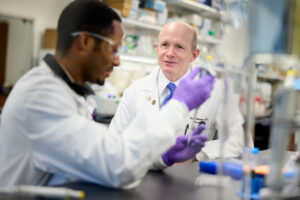
Biomarker test is based on technology developed at WashU Medicine

Prize Recognizes Drs. Randall J. Bateman and Kanta Horie of Washington University School of Medicine in St. Louis, and Drs. Oskar Hansson and Gemma Salvadó of Lund University, Sweden
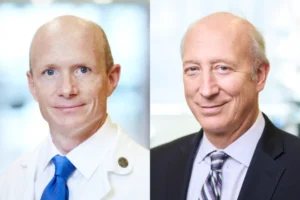
Washington University professors and C2N Diagnostics co-founders Dr. Randall Bateman and Dr. David Holtzman will receive the 2026 American Innovator Award from the Bayh-Dole Coalition in Washington, D.C., on June 3.
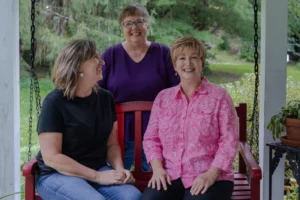
Some of the most important studies of potential treatments for Alzheimer’s disease rely on a group of participants who know they may never fully reap the benefits.
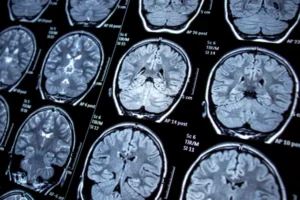
A network of families riddled with Alzheimer’s has given scientists a unique window on the disease. But the group’s future is uncertain amid funding cuts.

A single blood test may be able to predict when a person will develop Alzheimer’s symptoms—years before memory loss begins—according to new research from the Washington University School of Medicine in St Louis.
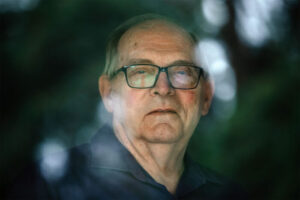
Scientists are trying to find out why one man has been able to stave off Alzheimer’s for nearly 25 years despite having a rare genetic mutation that doctors say essentially guaranteed he developed the disease by his late 40s or early 50s.

Jake Heinrichs is a Broadway theater electrician from Brooklyn who carries one of the early-onset genes. The disease claimed his grandmother, uncle, father and brother, all within the same age range. “Symptoms in the 40s and, and dying in 50s,” he said.

Carrie Richardson, 44, inherited a genetic mutation that caused early-onset Alzheimer’s disease. She’s participating in an Alzheimer’s research study at Washington University School of Medicine.

Scientists are searching for the secret in Doug Whitney’s biology that has protected him from dementia, hoping it could lead to ways to treat or prevent Alzheimer’s for many other people.